Customer information is fragmented
Inquiries arrive through disconnected channels, leaving staff to re-enter details and reconstruct context before work can begin.
A connected automation system that moves a service business from first inquiry to owner reporting—reducing repetitive administration while preserving approval gates and traceable business state.
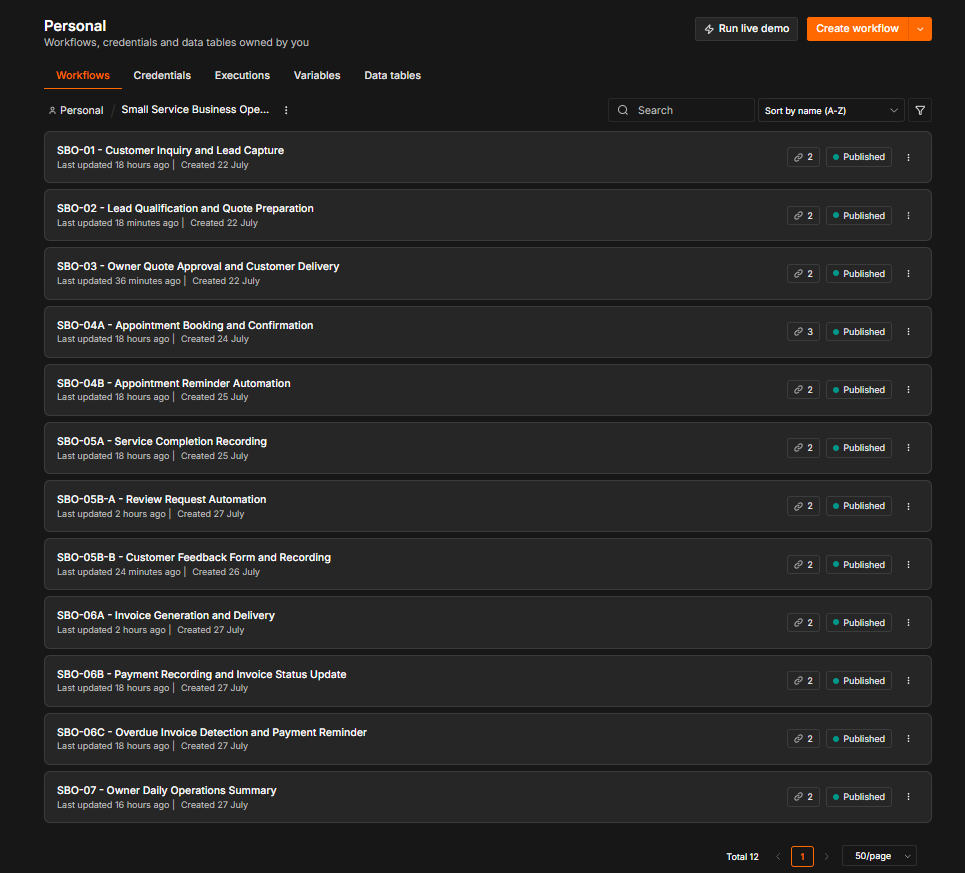
Small service businesses often move customer work across email, spreadsheets, calendars, messaging applications, and staff memory. The work is necessary, but the repeated handoffs make the operating state difficult to follow.
Inquiries arrive through disconnected channels, leaving staff to re-enter details and reconstruct context before work can begin.
Quote details, owner review, customer delivery, and lead status can drift when each step depends on a separate message or spreadsheet update.
Availability, confirmation, calendar creation, and reminders create ongoing coordination work for staff.
Late invoicing, untracked balances, and inconsistent reminders make it harder to understand what is outstanding.
Owners may not see missed follow-ups, overdue invoices, low reviews, or failed automations until the problem has already affected operations.
Each workflow owns a defined stage, validates its inputs, updates the shared operational record, and hands the next action to automation or the owner as appropriate.
The architecture separates customer and staff entry points, workflow validation, the authoritative data layer, communications, scheduled monitoring, and owner decisions.
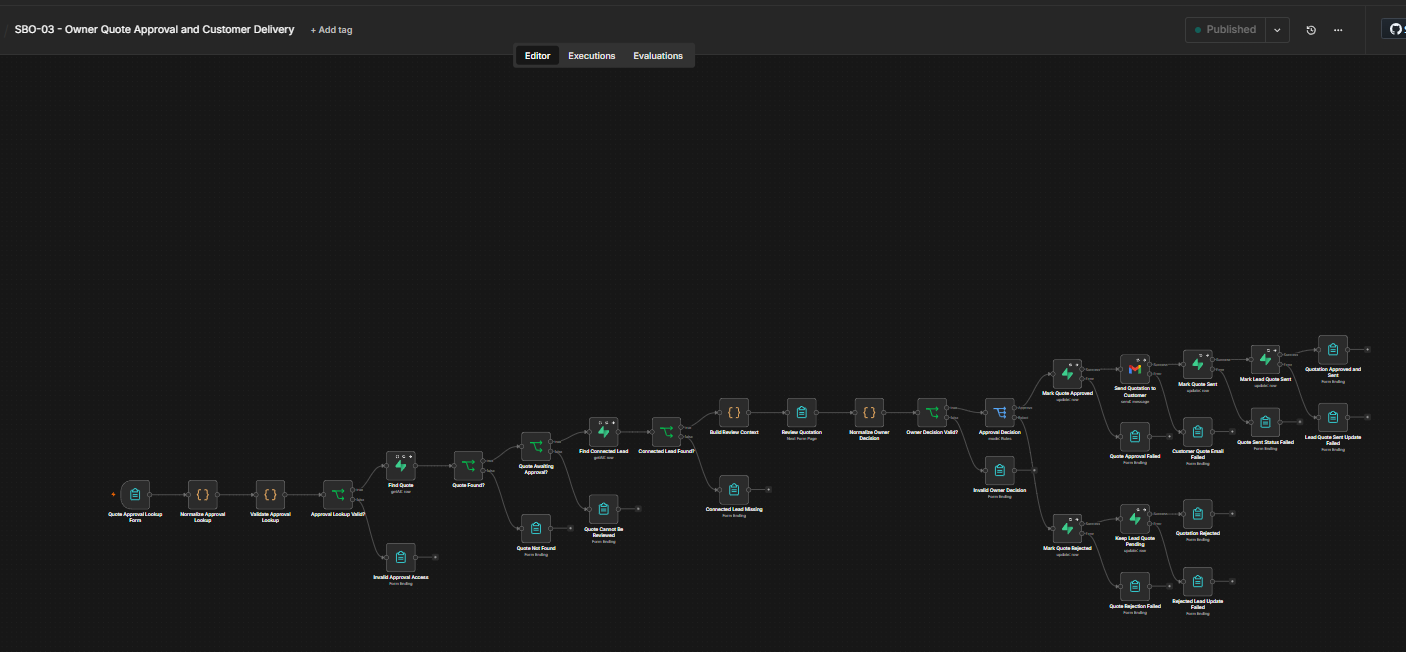
The screenshots below demonstrate business outcomes at key stages. Full-resolution links are provided so tall email and operational views remain readable without aggressive cropping.
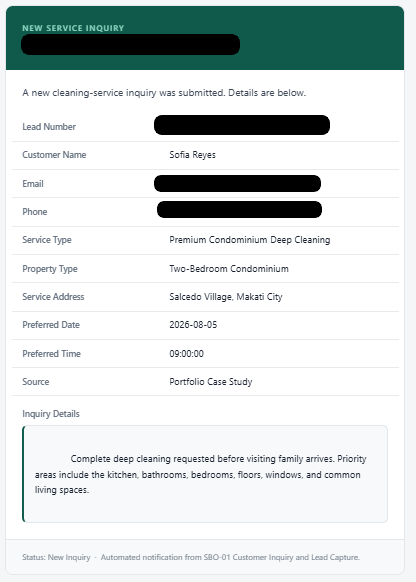
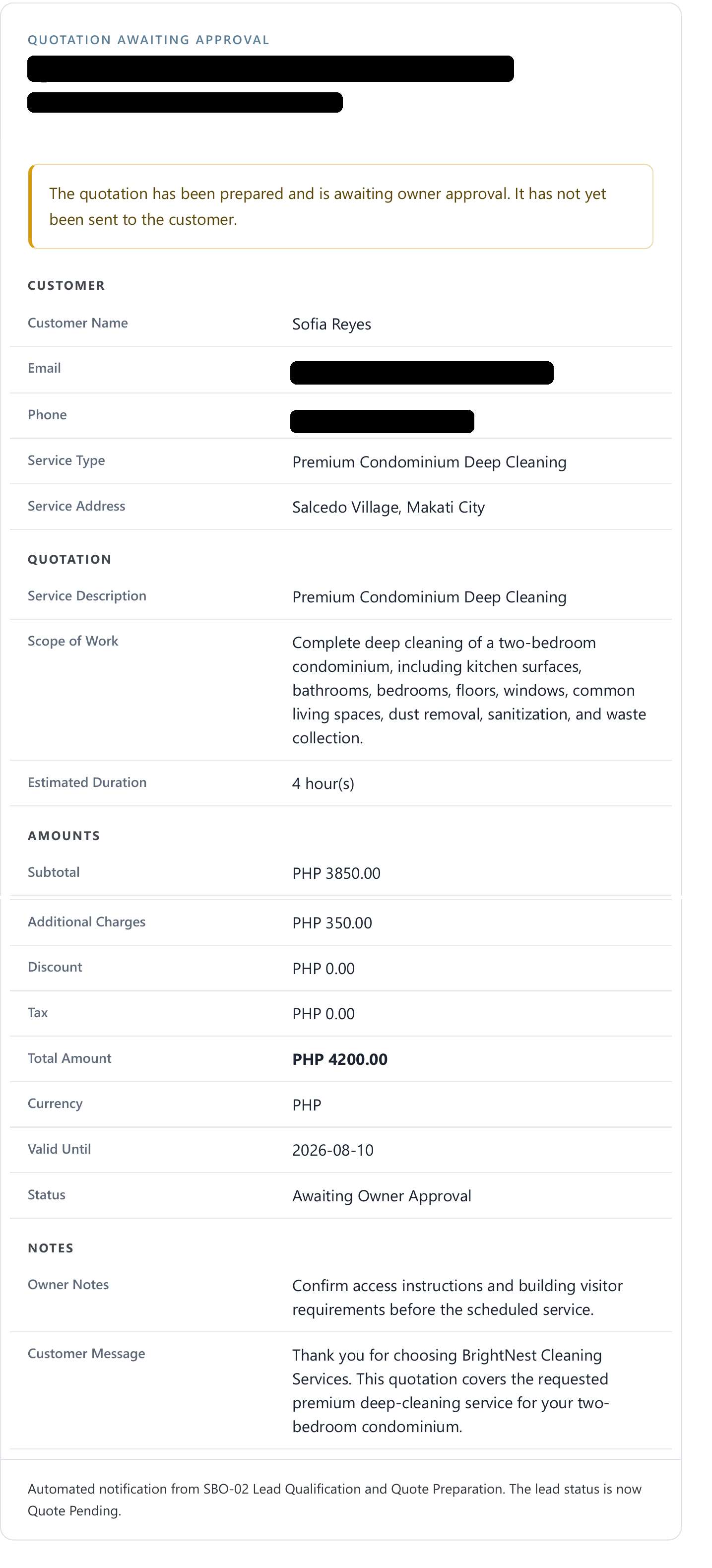
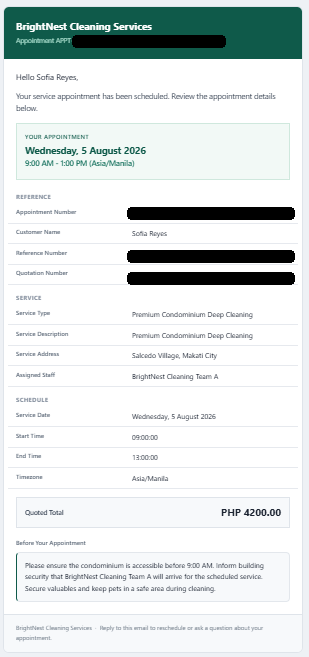
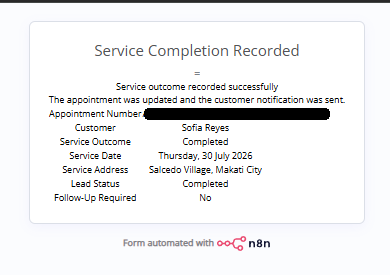
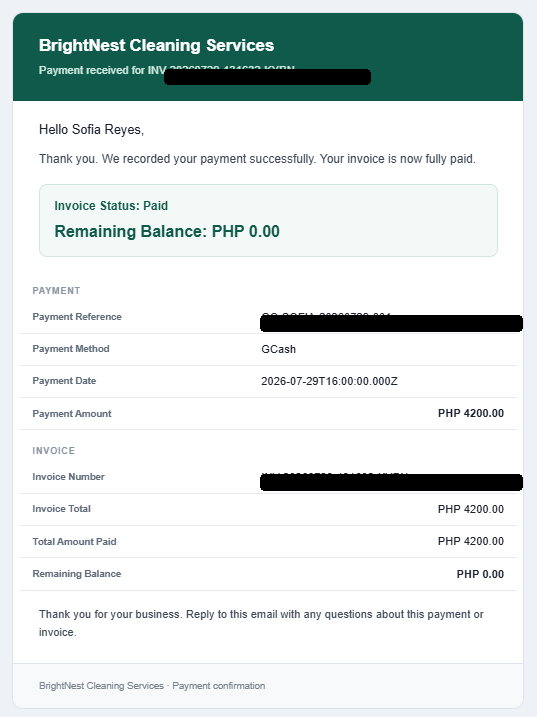
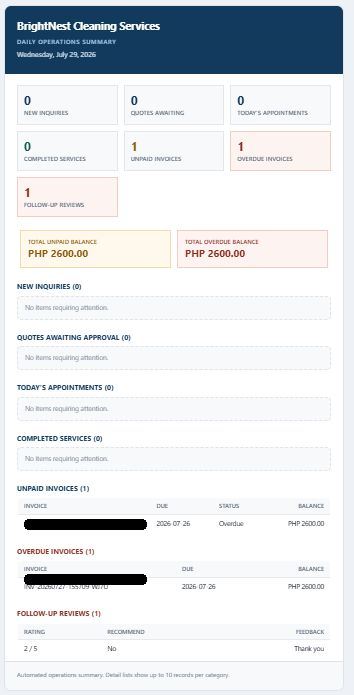
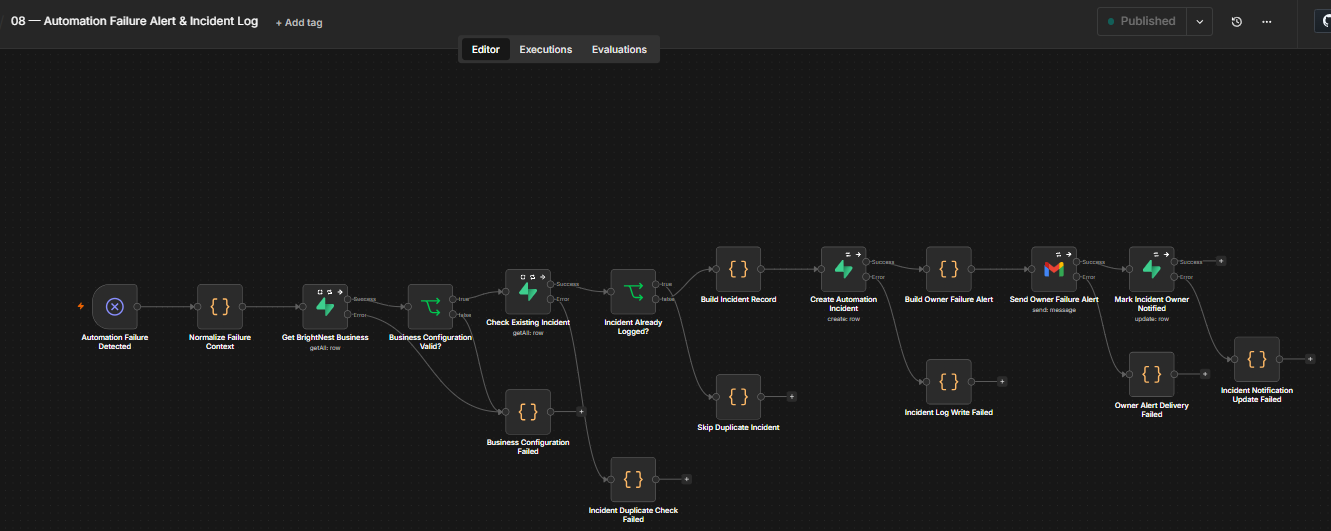
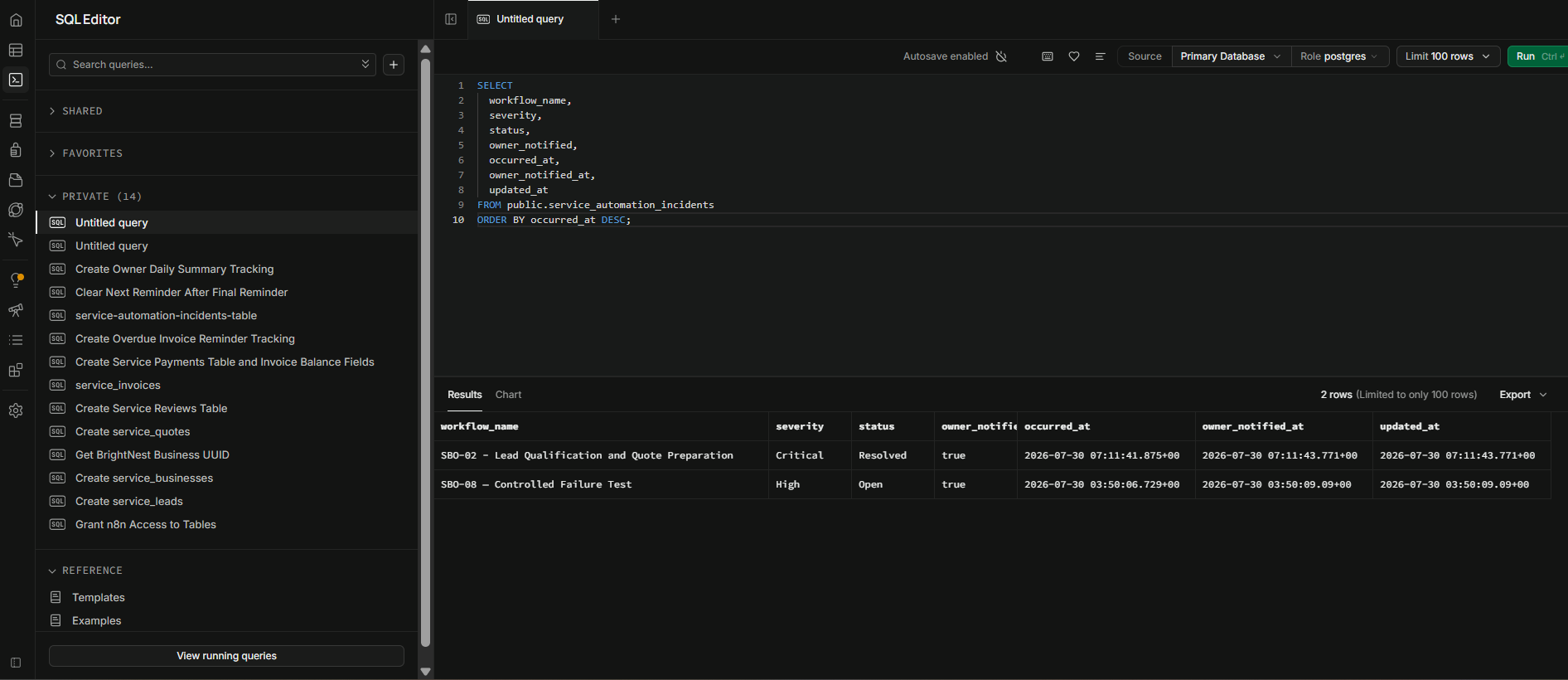
The system validates requests, prevents known duplicate actions, records business state, routes explicit failures, and surfaces incidents instead of letting abnormal conditions remain silent.
Required fields, linked records, eligible statuses, schedule constraints, payment amounts, and customer email availability are handled through deterministic branches.
Existing quotes, review requests, invoices, payment references, reminders, daily summaries, and incidents are checked before new records or notifications are created.
Leads, quotations, appointments, invoices, payments, reminders, reviews, summaries, and incidents are stored as related records.
Workflow operations include dedicated failure outcomes rather than silently continuing after a failed database or delivery step.
Owner emails cover quote approvals, low-rating follow-up, overdue activity, daily operations, and automation incidents.
Validation covered lifecycle updates, reminders, invoice and payment state, failure detection, duplicate incident prevention, and cross-table reconciliation.
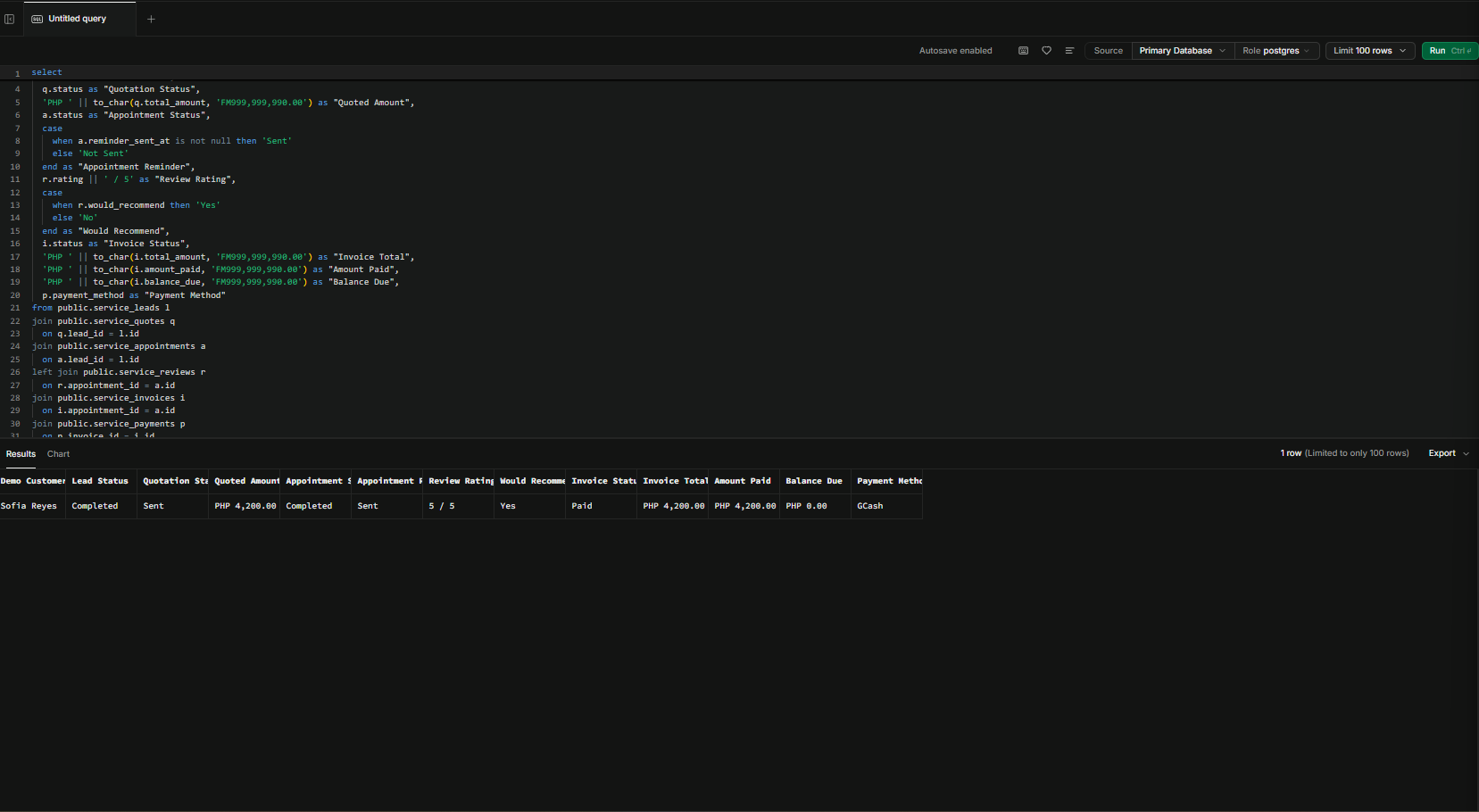
The value is a more consistent operating process: routine transitions move through structured automation while the owner sees the approvals, exceptions, and follow-ups that still require attention.
Automation handles the repetition.
Owners keep the judgment.
Only technologies evidenced in the supplied project are included.
I can help map the lifecycle, identify repetitive administration, define the approval boundaries, and design the connected system around it.