Pricing, operating hours, games, station types, and current availability.
AI · Automation · Operations · Customer Experience
GameQueue AI
An AI-assisted operations platform connecting customer self-service, reservations, waitlists, queue operations, monitoring, and staff-controlled decisions.
01 — Overview
One connected operating system for the customer journey.
GameQueue AI is an end-to-end gaming-lounge operations platform designed to reduce repetitive customer-service and operational work while keeping important business decisions under staff control.
The platform connects public discovery, trusted customer self-service, structured operational workflows, scheduled monitoring, staff alerts, and visible exception handling.
- Game catalog
- Station availability
- Reservations
- Waitlists
- Queue operations
- Customer self-service
- Gaming-session monitoring
- Reservation reminders
- Arrival and no-show checks
- Ending-soon monitoring
- Overstay monitoring
- Human escalation
- AI safety and audit monitoring
02 — Business problem
Necessary work repeated across every customer and session.
Gaming-lounge staff must answer questions, retrieve changing operational information, process requests, monitor time-sensitive conditions, and handle exceptions. The work matters—but much of the checking and repetition does not require staff judgment.
Reservation, queue, and waitlist lookups across separate operational records.
Reservation and waitlist intake that must be validated before becoming operational state.
Upcoming arrivals, reminders, late customers, and possible no-shows.
Ending-soon sessions and overstays that need staff awareness rather than automatic closure.
Sensitive situations and exceptions that require a person to review and decide.
03 — Existing manual process
A simple request can become a long chain of manual work.
Customer request
Staff receives request
Staff checks another system
Staff searches for information
Staff responds manually
Staff remembers follow-up
Staff monitors operational condition
Staff handles exception
04 — Operational pain points
Time is lost in repetition, handoffs, and silent exceptions.
Repeated customer questions
The same business information must be explained throughout the day.
Manual status checking
Reservation and queue updates require staff to search operational records.
Repeated reminders
Follow-ups and monitoring depend on someone remembering the next action.
Fragmented information
Customer context and operational state can live in separate tools.
Manual exception detection
Staff must actively watch for lateness, no-shows, and overstays.
Limited failure visibility
Abnormal states can remain silent until a customer or staff member notices.
05 — Solution
A connected operational system instead of isolated automations.
GameQueue coordinates customer interaction, trusted data access, validation, operational state, monitoring, notification, and human-controlled decisions.
AI understands intent→trusted workflow retrieves approved information→safe structured response
request→validation→staff decision→operational state
real form→authoritative queue entry→trusted customer binding→self-service update
scheduled workflow→condition detected→staff notified when required
06 — System architecture
Sanitized architecture with explicit trust boundaries.
No endpoint addresses, credentials, tokens, customer identifiers, workflow IDs, or database queries are exposed.
Customer / Staff
GameQueue Web Experience
Secure Server APIs
AI + n8n Workflow Orchestration
Business Rules
Supabase / PostgreSQL Operational State
Notifications / Staff Actions
Audit + Monitoring
07 — What was automated
Routine operations move automatically. Decisions do not.
Customer knowledge responses
Approved pricing, hours, games, and station information.
Reservation intake
Structured requests validated before staff review.
Reservation self-service
Trusted customer-bound status lookup.
Waitlist intake
Authoritative creation through a real customer form.
Queue self-service
Customer-safe queue updates using trusted identity.
Human escalation
Staff notification when the conversation requires judgment.
Reservation reminders
Scheduled checks surface upcoming actions.
Arrival and no-show monitoring
Late conditions are identified without automatic lifecycle decisions.
Session ending and overstay monitoring
Staff receive alerts while retaining session control.
Safety and audit monitoring
Abnormal workflow states remain visible and reviewable.
08 — AI role
AI improves the interaction—not the authority model.
AI supports natural-language interaction, intent classification, safe small talk, conversational routing, and customer-friendly communication. It does not receive unrestricted authority over reservations, queues, stations, sessions, or customer records.
AI can assist
- Understand customer language
- Classify supported intent
- Route approved requests
- Present safe, friendly responses
AI cannot decide
- Reservation approval
- Station assignment
- Privileged lifecycle actions
- Disputes or sensitive exceptions
09 — Workflow role
Deterministic controls carry the operational responsibility.
Workflows enforce request validation, trusted identity, customer-safe response contracts, business rules, database boundaries, idempotency, reservation and queue policies, escalation, monitoring, and fail-closed behavior.
AI assists.
Workflows enforce.
Humans decide.
10 — Human-controlled decisions
Automation removes repetitive work without removing staff authority.
Staff remain responsible for reservation approval or rejection, station assignment, privileged operational actions, disputes, exceptions, and sensitive customer situations.
- Reservation approval and rejection
- Station assignment
- Privileged operational actions
- Disputes and exceptions
- Sensitive customer situations
- Any decision requiring judgment
11 — Security & reliability
Customer convenience stays behind controlled boundaries.
The public experience exposes only the information required for the customer task. Identity, database access, operational authority, and abnormal states remain controlled behind the application boundary.
Internal identity stays internal
Database customer identifiers are not exposed to customers or trusted when supplied by a caller.
Customer-bound access
Customer-specific information requires a trusted session associated with that customer.
Allowlisted responses
Public responses contain only approved fields—not internal metadata, SQL, credentials, tokens, or backend details.
Replay and duplicate controls
Idempotency prevents repeated requests from creating unintended duplicate actions or notifications.
Visible abnormal states
Malformed or unexpected workflow conditions are monitored rather than silently accepted.
Controlled failure
Failed operations return sanitized customer-safe responses and do not expose implementation details.
Safe waitlist binding
Customer binding fails closed when an existing conversation belongs to a different customer.
Human authority preserved
Approval, assignment, and privileged lifecycle decisions remain staff-controlled.
12 — QA & validation
Normal paths, failures, trust boundaries, and customer output were all considered.
No unsupported test totals or performance claims are presented.
Normal customer flowsInvalid inputsAnonymous accessTrusted customer-bound accessReservation lookupQueue lookupWaitlist creationDuplicate and idempotent behaviorHuman escalationMalformed statesMonitoringResponsive frontendCustomer-safe output validation
13 — Business value
Less repetitive checking. Better visibility. Staff attention where it matters.
- Reduces repetitive customer inquiries
- Reduces manual reservation and queue checking
- Reduces manual operational monitoring
- Improves visibility into exceptions
- Provides faster customer self-service
- Connects fragmented operational processes
- Keeps staff focused on exceptions and judgment
14 — Technology
Technology follows the operating model.
The tools support the solution; they are not the case study’s central claim.
AI & Orchestration
- n8n
- LLM integration
Backend & Data
- Supabase
- PostgreSQL
- REST APIs
Frontend
- Next.js
- React
- TypeScript
Reliability
- Validation
- Idempotency
- Monitoring
- Audit trails
- QA
15 — Demo / evidence
Working public proof, supported by existing GameQueue assets.
The live demo is the authoritative interactive evidence. The gallery reuses existing GameQueue production assets and intentionally avoids exposing real customer data or internal operations.
Launch Live Demo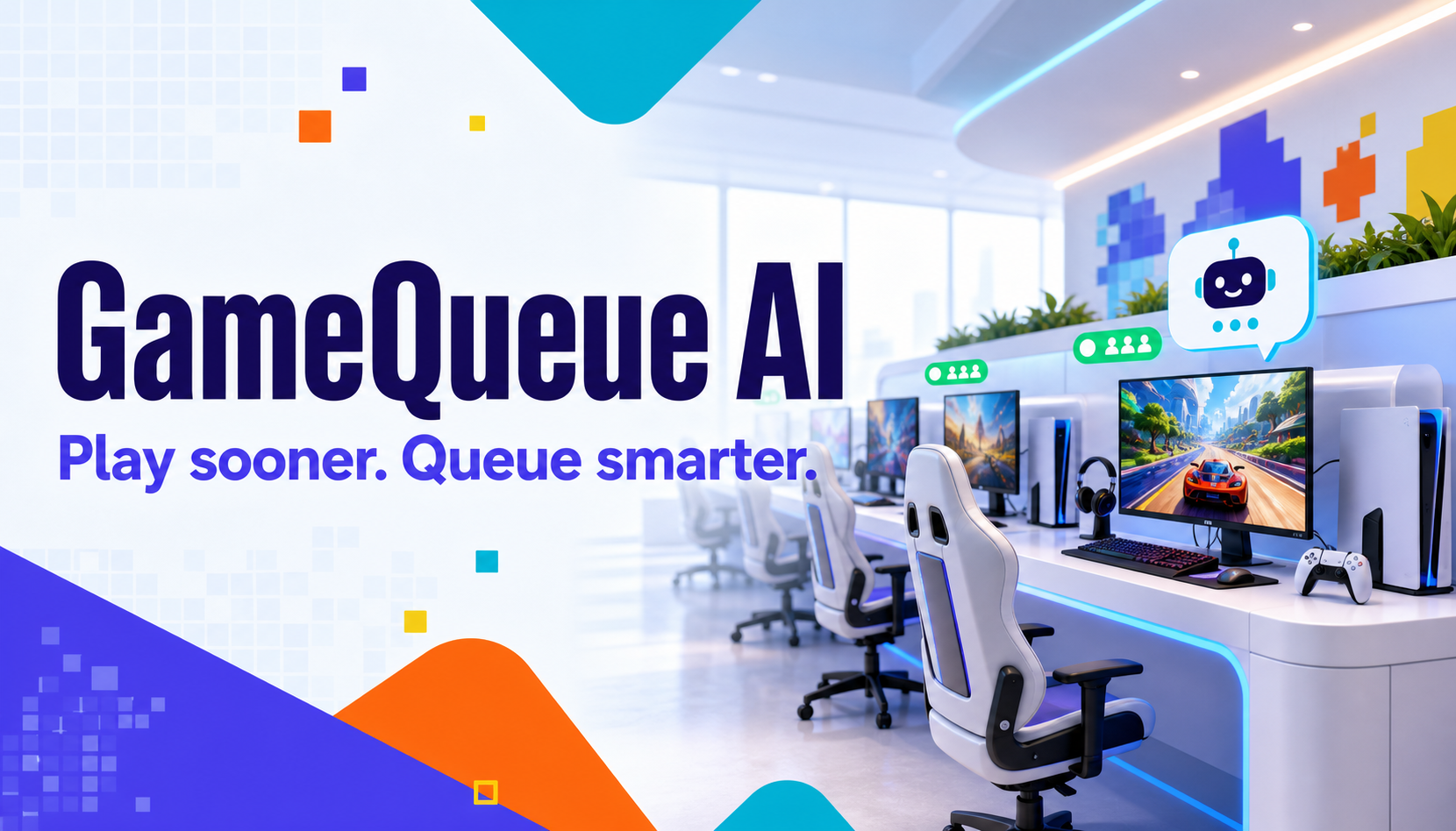



16 — Key takeaways
Three principles behind the system.
AI can improve customer interaction without becoming the security boundary.
Deterministic workflows own business rules and privileged operations.
Operational automation works best when repetitive work disappears but exceptions remain visible.
Start with the process
Have a similar business problem?
Show me how your team handles the process today. I can help identify where automation or AI could remove repetitive work while keeping the decisions that matter under human control.